For AI-built apps
Your app. Explained.
Reverse reads the code behind your app and explains it in plain language. Ask for a change, check the preview, and ship it without having to learn code.
Works with Claude Code, Lovable, v0, Cursor, and anything else that lives in a GitHub repo.
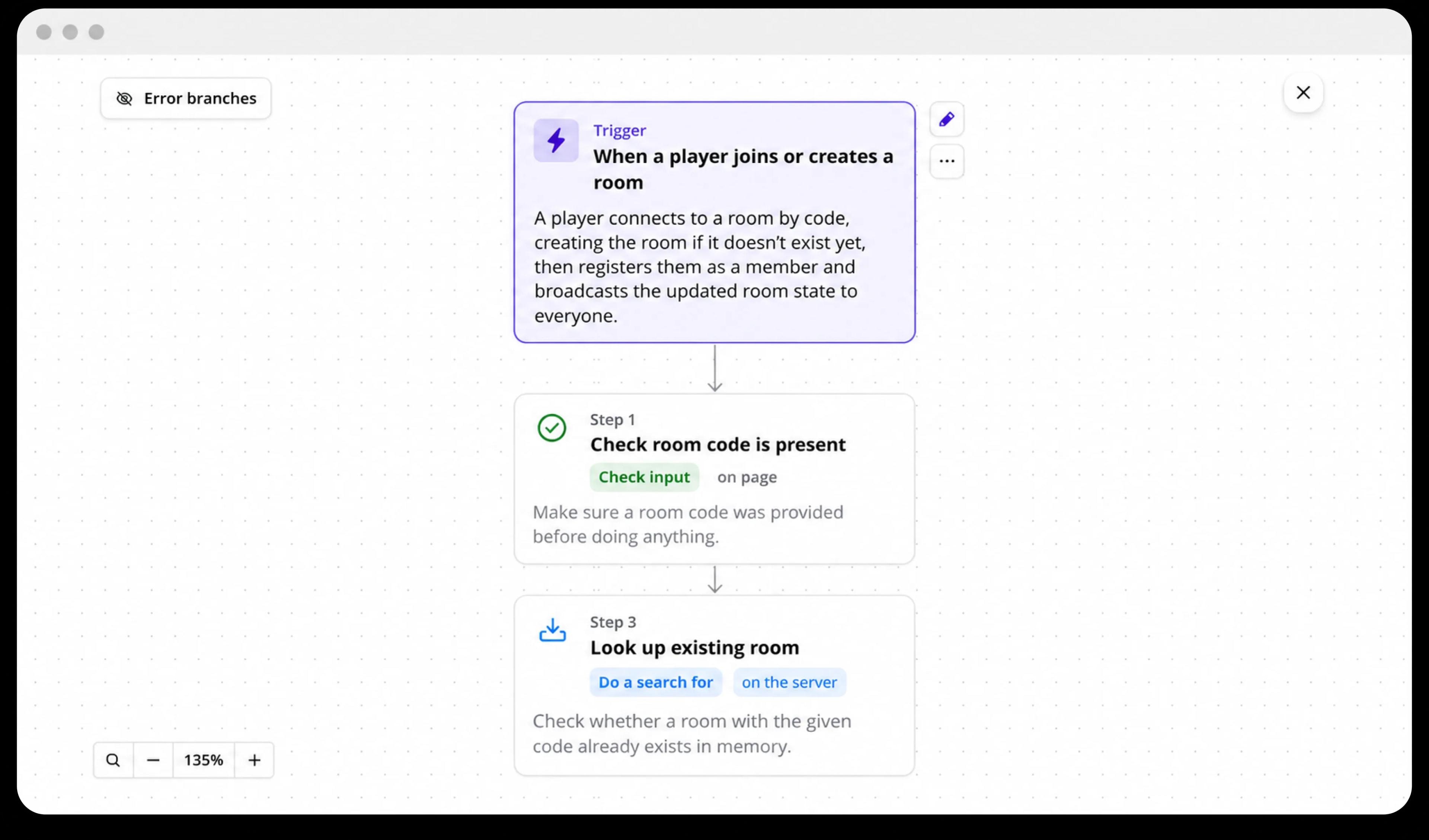
AI can spin up an app,
but do you know how it works?
What’s inside the app is a mystery.
The app runs, but open the code behind it and there’s no straight answer to “what does this part do?”
Edits that overshoot.
You know exactly what you want to update, but your tools change more than you asked.
One person holds all the answers.
When only the builder understands the app, every question ends up in their inbox.
How it works
Reverse reads your code so you don’t have to.
Understand what you’ve got
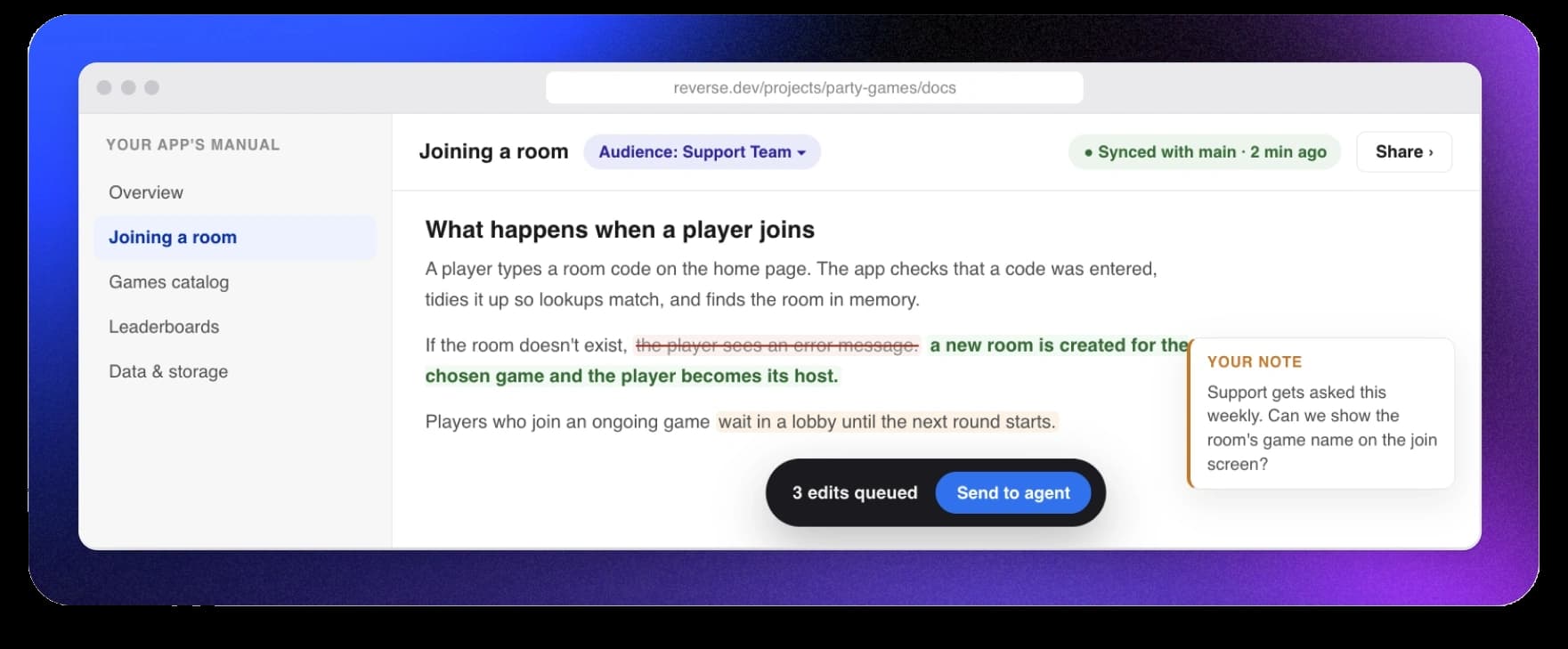
Connect to GitHub, and Reverse maps your whole app in plain language: a visual flowchart of every workflow, self-updating docs, and a parts list of what it’s built on.
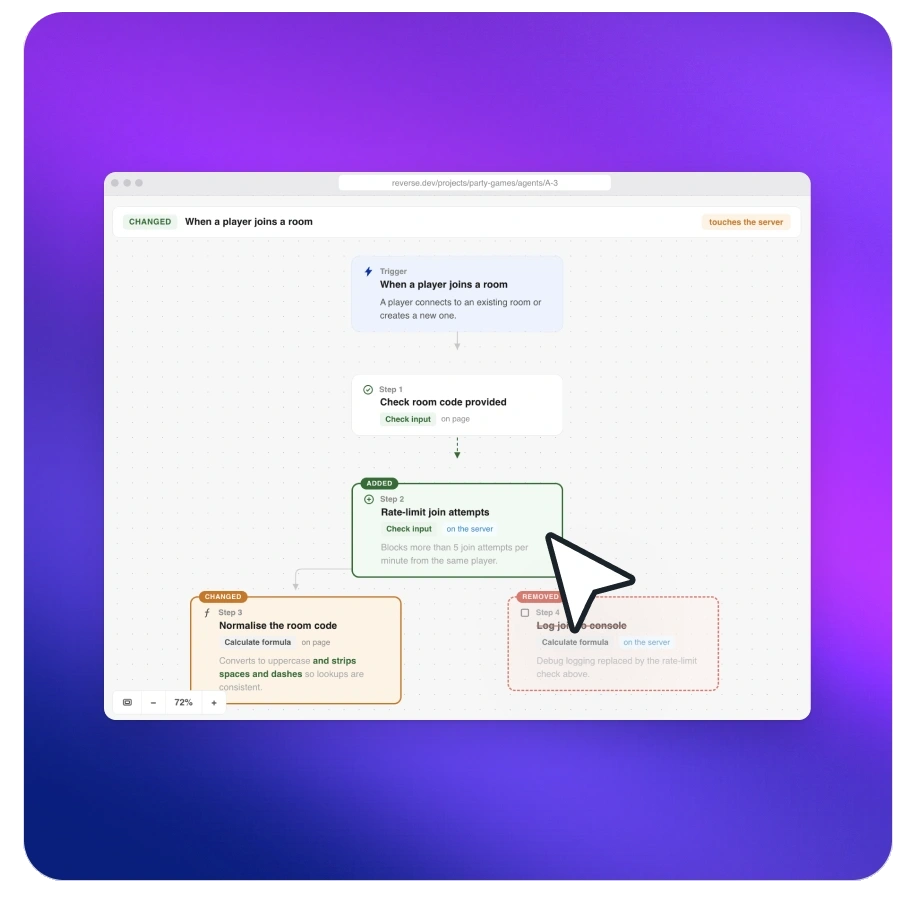
Describe the change, point at the spot
Explain what you want in simple words, or click the exact workflow step you mean. An AI agent makes the change right there, nowhere else.
Preview it, then ship something solid
Before anything goes live, the agent shows you what will change, a picture of the new path, and a private preview. Nothing ships without your yes.
who’s it for
Built for builders. Coders or not.
Solo builders who don’t code
It’s your app. You deserve to know how it works, but you shouldn’t have to learn how to code first.
Teams where not everyone codes
One shared view for devs, PMs, QA, and everyone in between. New people get up to speed without a walkthrough.
Agencies and consultants
Make sense of client apps you didn’t build, and get the answer to “how does this work?” without digging.
We don’t replace your builder.
We explain what it built.
Reverse connects to your GitHub repo and sits alongside whatever you build with. Your tools, a developer, or both can keep working on the same codebase. You’re never locked in, and switching tools doesn’t mean you have to start over.
Import from

Testimonials
You don’t have to take our word for it
“The fact that you can edit the code here is great, but the fact that you can actually preview it is even better, because I know that what the agent is coding is actually coming out correctly.”
— Jordan P., Solo builder who doesn’t code
This is a pilot, and spots are limited.
We’re accepting a small first group, which means you can expect some rough edges — but your feedback can help shape the product.
Your app is about to make
a lot more sense.
Connect a GitHub repo and see your whole app mapped in plain language, in minutes, with no code to read.
Frequently asked questions
No. Reverse explains your app in plain language, and you make changes by describing them the same way. The one thing you do need is your app’s code on GitHub, and we’ll show you how to connect it.
Not unless you want it to. Because Reverse works through GitHub, it sits alongside whatever else touches your code, whether that’s Lovable, v0, Cursor, or a developer you work with. Switch between them anytime.
No. When you ask for a change, Reverse shows you a summary of what will change and a preview you can click through before anything goes live. You always see what’s shipping before it does.
Reverse reads your code to build its map of your app. When you make a change, it works on a separate branch and prepares the change for your review. Your live app isn’t touched until you approve.
Your code stays in your GitHub repo, where it already lives. When you ask a question or request a change, Reverse’s AI agent reads the files it needs to do that job.
Team collaboration is included in Reverse through shared workspaces. A workspace owner can invite users with permission roles like View Only and Editor.
Every change goes through a preview in Reverse first, so you can catch problems early. If something does slip through, every change is saved in GitHub’s history, so you can roll back to the version that worked.
During the pilot period, everyone will get 10K free credits. Once you’re ready for more usage, you have two options:
- Pay as you go. Credit bundles start at $10.
- Bring-your-own-key pilot access. A one-time payment of $20 for the full pilot experience, using your own Anthropic (Claude) API key, until the pilot is complete.
Pilot purchases aren’t refundable. For current pricing, check your workspace billing settings or reach out to support@reverse.dev.
Pilot purchases aren’t refundable — it’s part of what keeps a small experimental beta viable. If something goes seriously wrong, talk to us and we’ll figure it out together.
Not today. Reverse is for apps that already exist — it reads them, explains them, and helps you change them.